Is a Radar Reflector Right for My Mission?#
Exempt vs. Non-Exempt Launches#
A radar reflector is not required if your balloon launch is “exempt” under FAR Part 101 Subpart A, which is discussed in detail in the FAR Part 101 chapter. However, even if a radar reflector is not required, it is good practice and good fun to make one. The reflector won’t add much weight to your craft, but it will make the entire project a more well-engineered system. If you are flying non-exempt, then you do need to put a radar reflector on your craft and this is the place to learn how.
Purpose of Radar Reflectors#
Typical radar reflectors that you can buy are often made for small watercraft (like canoes) so that they will show up on the radars of larger ships and everyone can avoid a collision. Interestingly, this type of “big-boat/little-boat” interaction is very similar to what we deal with in the aviation world. Large aircraft have radar to navigate and identify airborne objects, both natural and unnatural. Very small weather balloons are not a significant threat to large aircraft (based on the statistical likelihood of collision and the physics of an airplane designed to keep people safe in a wide range of conditions), but colliding with objects is not something they want to do. Plus, it would follow that if you put money and effort into building a homemade spacecraft then you would like to get it back too.
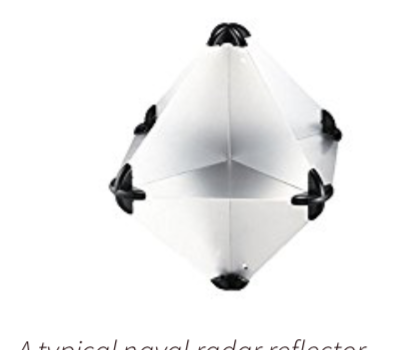 A typical naval radar reflector made from aluminum.
Large aircraft also use radar systems and ADS-B to stay safe in the air. Radar looks for other airborne objects so that pilots can make easy early avoidance maneuvers.
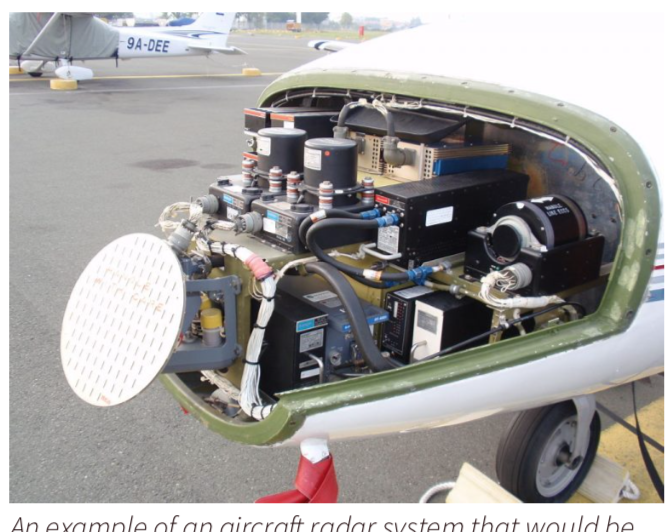 An example of an aircraft radar system – way too much for a small balloon payload. The system shown here is for a private jet. Source: Dtom (Own work) [CC BY-SA 3.0 or GFDL], via Wikimedia Commons.
The Wikipedia page on corner reflectors has additional information and graphics.
Why Do-It-Yourself is the Best Choice#
Weight is not very important on a boat, but durability is, so commercially available radar reflectors tend to be made out of sheets of metal. For a high altitude balloon launch, the requirements are almost perfectly flipped: every ounce of additional weight requires more lifting gas (more expensive) and can eventually lead to needing a larger balloon (more expensive again). At the same time, the environmental conditions that our radar reflector will face are not very harsh or long-lasting, unlike on a boat. So our radar reflectors can be almost disposable and easily made at home. This method will be great because the radar reflectors will be cheaper (nice!) and much lighter (very nice!).
Building a Lightweight Radar Reflector#
Instructables user “edjez” has some great tutorials on how to make lightweight radar reflectors at home. I recommend the “Lightweight Radar Reflector” which is re-created and expanded on below, with permission.
Reflector Panels and Cutting Slots#
To start, get three square pieces of cardboard with side lengths of 6"-12" (you pick the size but all pieces must be the same size). Cut slots in the cardboard in the locations shown below. Make sure that the slots you cut are only as wide as the cardboard thickness plus the thickness of the aluminum tape (details below), or a little bit less – it is better to have it snug so the friction will work with you when you are putting the pieces in place.
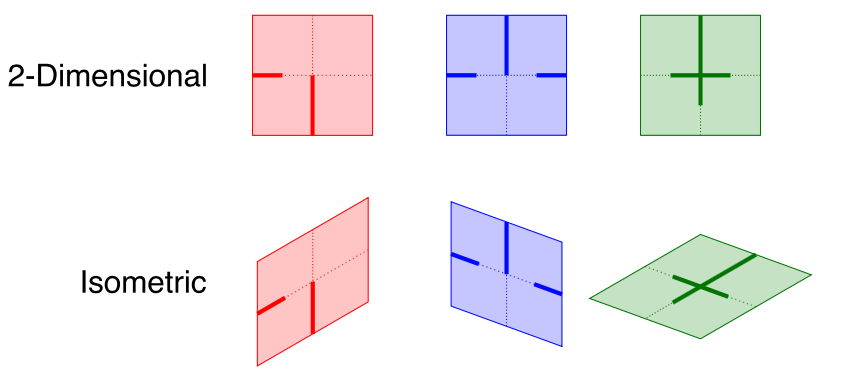 Cut slots in the locations marked by thick lines. Slots should be the thickness of the cardboard plus the thickness of the reflective tape, or a little less for a snug fit. Dashed lines are only for reference to mark the middle of the square in each dimension.
Creating a Reflective Surface#
Once the panels are cut you can affix a thin aluminum layer as aluminum tape. If you insist on doing it the hard way you can use plain aluminum foil sheets (like you use for cooking) and some tricky taping. The three panels of the reflector will need to be taped together anyway, and having the entire surface of the aluminum bonded will be much more robust than affixing with tape by hand, so I recommend just using the aluminum tape.
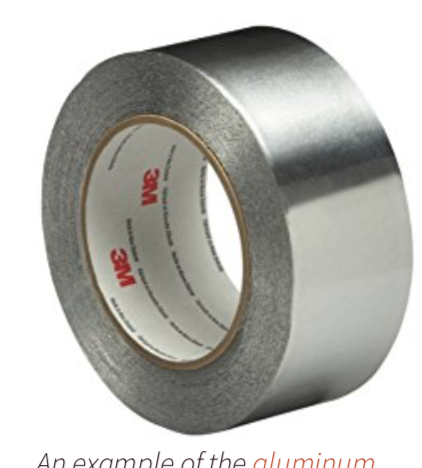 An example of the aluminum tape used for the radar reflector.
Assembling the Radar Reflector#
Once the panels have slots and are covered with aluminum it is time to start putting them together. You want every angle to be as close to 90 degrees as possible and you can use the corner of a table to help you achieve this.
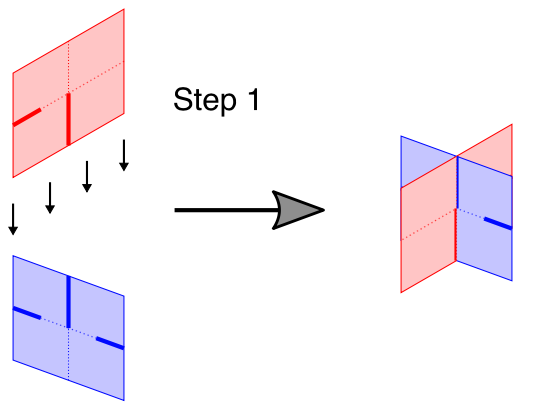 Connect the first and second panel by combining them at matching notches.
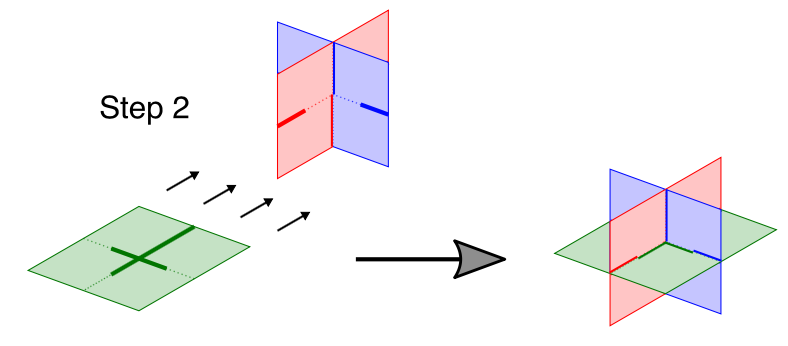 Adding the third panel takes some bending but the cardboard should have no problem with this.
Installing the Radar Reflector#
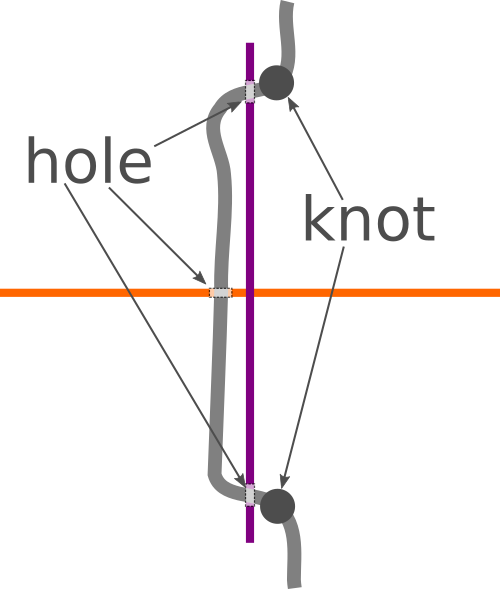
I recommend stringing your cord through the radar reflector and securing it with at least one knot above and one below to prevent it from sliding along your rope in either direction. Make sure you do this at some point below the parachute so you don’t lose it once the balloon bursts.
How a Radar Reflector Works#
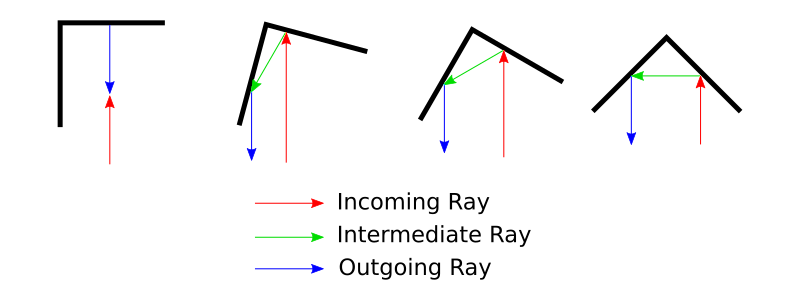
You can see that regardless of the orientation the radar reflector will send back at least some radiation. This holds up in 3 dimensions as well but is far more difficult to illustrate. See the Wikipedia page on corner reflectors for a decent 3D visualization.
Automatic Dependent Surveillance – Broadcast#
Large aircraft transmit information about location, airspeed, and related data using Automatic Dependent Surveillance – Broadcast (ADS-B), so that they show up on air traffic control displays and other aircraft show up on their own displays. A balloon is not complex or large enough to easily carry an ADS-B system (there is an ongoing effort to change this), so the best we can do is reflect radar signals so that aircraft can still see your nearspacecraft.